
Why First aid training matters in the workplace?
Emergencies can happen anywhere and at any time, including in the workplace. Occupants of the workplace could suffer an injury, become seriously ill, experience a fall, receive an electric shock, or have medical emergencies such as seizures or cardiac arrest. In this situation, knowing what to do can make a difference while waiting for professional medical assistance.
First aid training gives an employee the knowledge, skills and confidence to respond appropriately to workplace emergencies. It is an important part of workplace emergency management because it helps employees prepare for incidents rather than being unsure of what to do when an emergency occurs. WHS & OHS Act’s provide a requirement for workplaces to have an appropriate First Aid system in place.
What is first aid training?
First aid training teaches people how to provide immediate assistance to someone who is injured or becomes ill, the aim is to provide appropriate initial care until the person can receive further medical treatment.
Depending on the course, employees may learn how to:
- Assess an emergency
- Contact emergency services
- Perform CPR
- Use an automated external defibrillator (AED)
- Control bleeding
- Treat burns
- Respond to chocking
- Assist someone who has fainted or suffered a seizure.
- Provide basic care for injuries
- Recognise serious medical emergencies
- Protect themselves and others from further danger
The Importance of first aid training in the workplace
First aid is an important component of workplace emergency preparedness. When an incident occurs, employees may be the people closest to the person who needs help. Having trained employees means there is a greater chance that appropriate first aid can begin promptly while emergency services are being contacted.
For example, if an employee collapses and is not breathing normally, a trained worker may be able to recognise the emergency, call 000, begin CPR and use AED if one is available and they are trained to do so. This demonstrates why first aid training should be considered alongside other emergency procedures such as evacuation plans, emergency communication and fire safety.
Benefits to having employees trained in first aid:
- Employees can respond more quickly
One of the major benefits of first aid training is that employees know how to respond when an emergency occurs. Without training, people may panic or be unsure about what actions to take. Training provides employees with a structured approach to emergencies.
A trained employee can:
- Identify that an emergency has occurred
- Check the area is safe
- Assess the injured or ill person
- Contact the emergency services
- Provide appropriate first aid
- Continue monitoring the person until help arrives
- Employees develop confidence
Emergencies can be stressful. Someone who has never received first aid training may be worried about making the situation worse. Training provides employees with the opportunities to learn and practice first aid skills. This can increase their confidence in responding to an emergency.
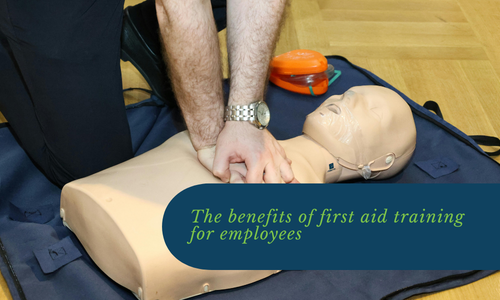
For example, practicing CPR on a training manikin allows employees to become familiar with the basic process before they are ever required to use the skill in a real emergency. Confidence does not mean employees should attempt procedures outside their training. Instead, it helps them understand what they can safely do and when professional medical assistance is required.
- First aid can support workplace emergency management
First aid training should form part of a broader workplace emergency management system.
A first aid plan may include:
- Emergency contact information
- Extrication procedures
- Emergency exits
- Communication procedures
- First aid arrangements
- Roles and responsibilities
First aid trained employees can contribute to this system by providing immediate assistance when appropriate. This means first aid is not an isolated workplace activity. It works together with emergency planning, risk assessments, employee training and workplace health and safety procedures.
- Employees learn how to recognise emergencies
First aid training is not only about treating injuries. It also teaches participants to recognise situations that may require urgent medical assistance.
Employees may learn to identify signs associated with conditions such as:
- Cardiac arrest
- Chocking
- Severe bleeding
- Burns
- Shock
- Seizures
- Severe allergic reactions
- Fractures and other injuries
Recognising a medical emergency early can help employees take appropriate action and seek professional assistance without unnecessary delay.
- Employees learn how to use an AED
Many workplaces have an automated external defibrillator (AED) and workers may know how it is used during a cardiac emergency. An AED is designed to analyse a person’s heart rhythm and, when appropriate, deliver an electrical shock. Employees should follow the instructions provided by the device and their training, while emergency medical assistance is being arranged.
Knowing where an AED is located and understanding how it works can be valuable during a workplace emergency.
- Training helps create a safety culture
Regular first aid training demonstrates that workplace safety is taken seriously. When employees receive appropriate emergency training, they become more aware of workplace hazards and the importance of being prepared.
This can contribute to a workplace culture where employees are encouraged to:
- Report hazards
- Follow safety procedures
- Keep emergency areas accessible
- Participate in emergency drills
- Know where first aid equipment is located
- Take workplace emergencies seriously
A strong safety culture involves everyone, from managers and supervisors to employees and contractors.
First aid skills employees should learn:
CPR – Employees can learn how to perform cardiopulmonary resuscitation when someone is unresponsive and not breathing normally.
Choking – Training and teaching employees how to respond when a person is choking and how to seek emergency assistance.
Bleeding and wounds – Employees can learn how to provide appropriate first aid for cuts, wounds and serious bleeding.
Burns- Training can cover appropriate immediate treatment for burns and when medical attention is required.
Fractures and injuries- Employees can learn how to provide initial assistance while waiting for professional medical help.
Medical emergencies- Training can help employees recognise potentially serious medical conditions and understand when emergency services should be contacted.
First aid training and workplace emergencies
Consider a situation where an employee collapses at work.
A trained employee may recognise that the situation is serious, check the person’s condition, ask someone to call 000, retrieve the AED and begin appropriate first aid while waiting for emergency responders. This example shows how training can turn an emergency into a situation where employees have a clear response process. The trained employee is not replacing paramedics or doctors, instead, they are providing initial assistance until professional help arrives.
Conclusion
First aid training is an important part of workplace emergency management. It provides employees with practical knowledge that can help them respond appropriately to injuries and medical emergencies. The benefits include helping employees respond more quickly, increasing confidence, improving emergency preparedness, developing awareness of workplace hazards and supporting a positive workplace safety culture.
However, first aid training should be only one part of a comprehensive emergency management system. Workplaces should also have appropriate emergency plans, communication procedures, evacuation arrangement, emergency equipment and trained personnel.
Most importantly, employees should know what to do, who to contact and where to find help when an emergency occurs. By investing in appropriate first aid training and regularly reviewing emergency procedures, workplaces can be better prepared to respond to unexpected situations and support the safety of workers and other people at the workplace.
GET IN TOUCH
Are you ready for peace of mind that your workforce is as safe and prepared as possible?
With a dedicated team of staff ready to help you meet compliance requirements and improve the overall safety of your workplace, all you need to do is get in touch.
Request your free audit today!