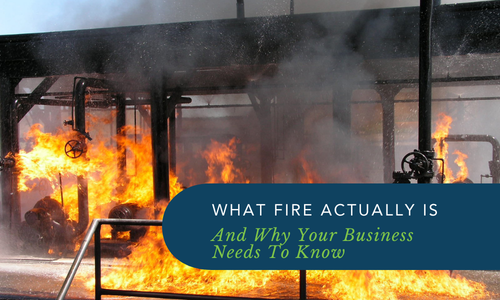
Fire is one of those things that we avoid thinking about unless absolutely necessary. We know the basics – we all know to stop, drop, and roll, get out of the building, don’t use the lift. However, knowing what a fire is and understanding what it is are two different conversations and could well be the key to preparing and protecting your business and your people.
This blog looks at what fire really is, how quickly it really happens, and how important it is to have your workplace prepared to respond to it safely.
So, what actually is Fire?
Most people have been educated around the fire triangle. The three core elements around what needs to be present for a fire to exist, Heat, Fuel, and Oxygen. The concept is simple and still holds up, remove one from the others and a flame cannot survive. Place a fire blanket over a pan fire and you cut off the oxygen. Douse a log fire with water and you strip away the heat source. Clear the fuel and the fire has nothing left to burn.
However, they have quietly introduced a new concept to this list of requirements – a self-sustaining chemical chain reaction. Not as punchy as the other three faces, however it is just as important to understand. Once ignition occurs, fire produces highly reactive particles which accelerates its growth – continuously interacting with the heat, fuel, and oxygen to generate more energy, which drives more reactions.
Fire, once started, feeds itself.
This concept, the four requirements are now shown as a tetrahedron – a triangular pyramid where each face represents one of its elements. Each face is supported by the others. Remove any single element and the entire structure collapses – the fire goes out.
Fires are Quicker than Most People Realise
The conditions for fire exist pretty much everywhere and are pretty much unavoidable within the modern workplace. Electrical equipment, kitchen appliances, machinery, furniture, paper, oxygen – the ingredients are all there, all that is needed is a spark to start the reaction.
Once that has happened, the clock is already running. A fire can begin to spread in as little as 30 seconds. Within 3 to 5 minutes a room could reach flashover – the point where everything within the area ignites simultaneously. The burning materials create smoke – which account for majority of fire-related fatalities – fills the space within minutes and travels faster and often further than the flames themselves.
With such little time to react, there is little to no room for improvisation. No time to work out where the exits are, who needs assistance, or where the assembly area is. By the time these questions are asked, the window for a safe evacuation may already be closing.
Fire is a year-round reality across Australia.
Fires are often a seasonal topic for us Australians. Bushfire season arrives and the awareness spikes and then tapers off – but the numbers tell their own story. According to the Productivity Commission’s Report on Government Services 2026, Australian fire service organisations attended over 101,000 fire events in 2024-25 alone, covering everything from structure fire to bush and grass fires. Fire does not take the rest of the year off, and neither should your workplace’s preparedness.
But what does preparedness actually look like?
It starts with making sure your people know what to do before anything happens. A well-trained team of Wardens are fundamental in ensuring that an evacuation runs smoothly and efficiently while remaining safe and orderly.
Ensuring that emergency documentation is correct and current is another key factor to ensuring your workplace is prepared for an emergency. Every business should have an Emergency Management Plan designed for your building(s) and people, paired with clear and current Evacuation Diagrams, which gives everyone a shared understanding of what the plan is well before an emergency occurs.
Evacuation Drills are paramount to an orderly response. No one likes to complete them; however, it is the most practical way to practice and revise procedures put in place. What may sound great on paper may not always be realistically the best course of action, a pathway taken may not work for specific occupants – you may never know until it is too late without the simulation in a safe environment.
Fire is something every Australian business should wholly understand, not just acknowledge.
Each fire is different, and there are different types of fire situations that need a different approach to be able to effectively combat it safely. The way you should approach an electrical fire is different to how you might combat a wood or furniture fire and is vastly different to how to correctly deal with lithium-ion battery fire scenario.
Knowing what to do, and how to do it is not always easy – and that’s where Workplace Emergency Management can help. Whether it is warden training, producing emergency management documentation or first attack firefighting training, we can not only get your business compliant with Australian standards and regulations, but confidently prepared to respond to a fire situation if it were to occur.
If you are unsure your workplace is ready, now is the time to find out. Get in touch and we will help you work through it.
GET IN TOUCH
Are you ready for peace of mind that your workforce is as safe and prepared as possible?
With a dedicated team of staff ready to help you meet compliance requirements and improve the overall safety of your workplace, all you need to do is get in touch.
Request your free audit today!