Most people are familiar with workplace evacuation procedures. But what happens when leaving the building isn’t the safest response?
Some emergencies may require people to remain inside the workplace, move to a more secure area or restrict movement throughout part or all of a facility.
That’s where workplace lockdown procedures may be required.
Where lockdown is relevant to your workplace’s risks, having clear procedures in place – and making sure your people understand them – can help your organisation respond in a coordinated way during a potentially confronting situation.
What is a workplace lockdown?
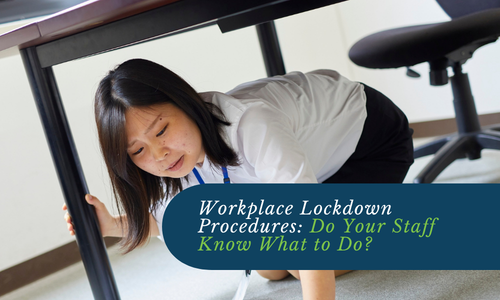
A workplace lockdown is an emergency response that may be used when an identified threat makes normal movement or evacuation unsafe.
Unlike an evacuation, where people are directed away from a building or affected area, a lockdown generally involves securing people within an appropriate location and limiting movement until the threat has been resolved or further instructions are provided.
The appropriate response will always depend on the nature and location of the emergency.
This is why lockdown procedures should form part of a broader, workplace-specific approach to emergency planning rather than relying on a generic response.
What types of emergencies could require a lockdown?
The circumstances that could require lockdown will vary significantly between workplaces.
Potential scenarios may include:
- A threatening or violent person within or near the workplace
- An armed confrontation
- A serious security threat
- An external threat that makes leaving the workplace unsafe
- A situation where authorities instruct occupants to remain inside or secure the facility
Not every workplace will have the same risk profile.
Factors such as your location, operations, building design, public access, workforce and surrounding environment should all be considered when determining which emergency scenarios need to be addressed in your emergency plan.
How should a workplace prepare for a lockdown?
Effective lockdown planning starts before an incident occurs.
Your workplace should first consider the types of threats that are reasonably foreseeable and how existing emergency arrangements would respond to them.
Where lockdown procedures are appropriate, planning may need to consider:
- Who has authority to initiate a lockdown
- How a lockdown will be communicated to occupants
- What employees, contractors and visitors should do
- Appropriate areas for people to move to or remain within
- How different areas of the workplace can be secured
- How the Emergency Control Organisation (ECO) will communicate
- How emergency services will be contacted
- How people requiring additional assistance will be supported
- What happens when the threat has passed
- How instructions from emergency services will be communicated and followed
Procedures should be specific enough to provide useful direction while allowing for the fact that emergencies can develop in unexpected ways.
How will you communicate a lockdown?
Communication is a critical part of any emergency response.
Your workplace needs a way to notify people that a lockdown has been initiated and provide clear instructions about what they are expected to do.
It’s also important to consider whether everyone will understand what the notification means.
Employees may have received training, but contractors, visitors, customers or members of the public could also be present.
Your planning should consider how information will reach different areas of the workplace and what alternative communication methods may be available if your usual systems can’t be used.
What is the role of the Emergency Control Organisation during a lockdown?
Members of the Emergency Control Organisation need to understand the emergency procedures relevant to their workplace — including lockdown procedures where applicable.
Their responsibilities will depend on the workplace, the nature of the emergency and the procedures that have been established.
This makes training particularly important.
Rather than expecting Wardens or a Chief Warden to determine a response for the first time during a serious incident, they should understand the procedures, communication methods and responsibilities that have already been established.
Emergency services may take control of the incident, and instructions from responding authorities should always be followed.
Do all employees need to understand lockdown procedures?
If lockdown forms part of your workplace emergency procedures, relevant employees need to know what is expected of them.
They don’t necessarily need the same level of training as members of the ECO, but they should understand how they will be notified of a lockdown and what actions they are expected to take.
This information can be reinforced through workplace inductions, emergency training and appropriate exercises.
Contractors and regular visitors should also be considered when developing procedures, particularly in workplaces where non-employees are frequently onsite.
Should workplace lockdown procedures be tested?
Emergency procedures shouldn’t exist only on paper.
Testing provides an opportunity to identify whether procedures are practical, whether communication methods work and whether the people involved understand their responsibilities.
For lockdown scenarios, exercises need to be carefully planned and communicated.
The objective is to test procedures and improve preparedness — not to surprise or frighten participants.
Following an exercise, the workplace should review what occurred, identify any gaps or points of confusion and update procedures where necessary.
Lockdown planning should reflect your workplace
There is no single lockdown procedure that will suit every organisation.
A small office, large commercial building, healthcare facility, school, industrial site and public-facing workplace can have very different environments, people and risks.
That’s why emergency planning should begin with the workplace itself.
Consider the emergencies that could reasonably affect your people, establish appropriate procedures and make sure the people expected to implement them understand their responsibilities.
If lockdown is part of those arrangements, ask yourself:
Would your people recognise a lockdown notification?
Would they know where to go — or whether they should remain where they are?
Does your ECO know how the procedure is initiated and coordinated?
If those answers aren’t clear, your lockdown procedures may need another look.
Workplace Emergency Management can assist organisations to review and develop workplace emergency procedures, train Emergency Control Organisation members and conduct appropriately planned emergency exercises.
GET IN TOUCH
Are you ready for peace of mind that your workforce is as safe and prepared as possible?
With a dedicated team of staff ready to help you meet compliance requirements and improve the overall safety of your workplace, all you need to do is get in touch.
Request your free audit today!