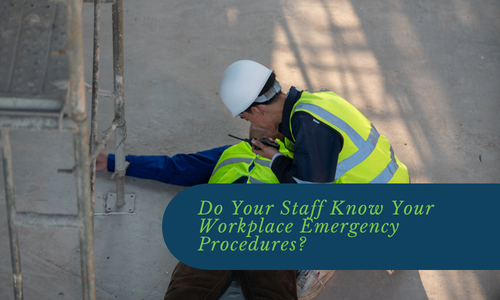
Most workplaces have emergency procedures. But having procedures in place is only part of being prepared.
The people within your workplace also need to understand them.
From new employees completing their induction to team members who have worked in the same building for years, everyone should have a clear understanding of what to do, where to go and who to follow if an emergency occurs.
So, if an alarm sounded in your workplace today, would your staff know what to do?
Why should employees know workplace emergency procedures?
Emergencies can develop quickly, and they’re not the time for employees to be learning procedures for the first time.
Employees should be familiar with the emergency procedures relevant to their workplace, including how to respond to an alarm, where emergency exits and evacuation routes are located, where to assemble and whose directions to follow.
This information should form part of the induction process for new employees, but it shouldn’t stop there.
Workplaces change. People change roles. Building layouts can change. Procedures are updated. And information that was covered during an induction several years ago can easily be forgotten.
Regularly reinforcing emergency procedures helps keep this information familiar and ensures employees understand what is expected of them.
What should employees do during a workplace emergency?
An employee’s responsibilities will depend on the emergency and the procedures established for their workplace.
Generally, employees should understand how to:
- Recognise and respond appropriately to alarms and emergency warnings
- Follow the directions of Wardens and other members of the Emergency Control Organisation (ECO)
- Safely evacuate using the appropriate evacuation route
- Proceed to the designated Assembly Area
- Report an emergency or hazard through the appropriate channels
- Avoid actions that could place themselves or others at additional risk
Employees who have designated emergency roles will have additional responsibilities specific to their position within the ECO.
The important thing is that everyone understands their own role rather than making assumptions about what they should do when an emergency occurs.
Do your staff know how to evacuate safely?
Knowing where the nearest emergency exit is matters, but effective evacuation planning goes further than simply following an exit sign.
Employees should be familiar with the evacuation arrangements for the areas in which they work.
This includes understanding primary evacuation routes, knowing where alternative exits are located and being aware that the safest available route may change depending on the nature and location of an emergency.
Employees should also know where the designated Assembly Area is and understand the importance of remaining there until further instructions are provided.
For larger, multi-level or more complex workplaces, evacuation arrangements may involve additional procedures. This makes familiarity with your workplace’s specific emergency arrangements particularly important.
Are emergency procedures included in your staff induction?
Emergency preparedness should form part of the onboarding process when someone joins your organisation or begins working at a new site.
A workplace emergency induction may include:
- The types of alarms and warnings used within the workplace
- What to do when an alarm sounds
- Emergency exits and evacuation routes
- The location of the Assembly Area
- How to identify Wardens and other ECO members
- How to report an emergency
- Any site-specific emergency risks or procedures
- Arrangements for people who may require assistance during an evacuation
The information provided should reflect the employee’s workplace, location and responsibilities rather than relying solely on generic emergency information.
How often should workplace emergency procedures be reviewed with staff?
Emergency preparedness isn’t a one-off induction exercise.
Regular training and evacuation exercises give employees an opportunity to revisit workplace emergency procedures and practise how they would respond.
Exercises can also help an organisation identify areas where procedures aren’t clearly understood or where its emergency arrangements may need improvement.
This can be particularly valuable following changes to a workplace, such as renovations, changes to evacuation routes, new emergency procedures or significant changes to staffing.
Rather than waiting until an emergency occurs to find out whether people understand the plan, regular training and exercises provide an opportunity to test that understanding in a controlled environment.
Emergency preparedness is about people, not just procedures
An emergency plan, evacuation diagram or procedure can provide important guidance – but ultimately, people need to know how to put that information into practice.
Ask a few simple questions around your workplace:
What would you do if the alarm sounded?
Where would you evacuate to?
Who is your Warden?
Where is your Assembly Area?
If your employees aren’t confident in their answers, it may be time for a refresher.
Workplace Emergency Management provides workplace emergency training and evacuation exercises to help organisations ensure their Emergency Control Organisation and wider workforce understand how to respond when an emergency occurs.
GET IN TOUCH
Are you ready for peace of mind that your workforce is as safe and prepared as possible?
With a dedicated team of staff ready to help you meet compliance requirements and improve the overall safety of your workplace, all you need to do is get in touch.
Request your free audit today!